
Google Ads
Navigating the Intersection of Artificial Intelligence and Cybersecurity
As AI technology rapidly advances, understanding AI governance and the necessary legal frameworks is essential for responsible development and deployment . The complexity and potential impact of AI systems necessitate clear laws to ensure ethical conduct and minimize harm .
We are currently in a changing landscape with new laws constantly being introduced or considered .
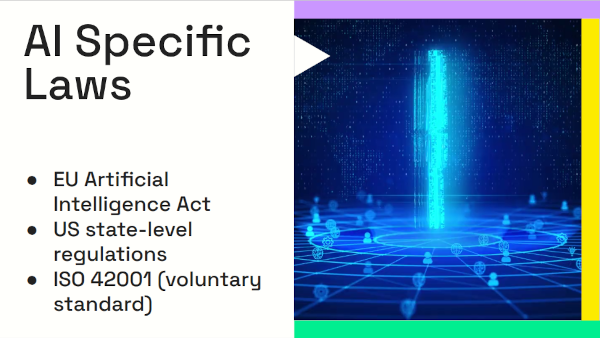
The EU has introduced the EU Artificial Intelligence Act . While some parts are mandatory now, full obligations may not be in force until 2030 due to delays .
Currently emphasizes innovation over regulation . No specific federal law exists; Senate Bill S312 was introduced but not enacted . However, states like California (SB53) and New York have implemented their own restrictions .
Emphasizes flexibility and innovation rather than specific laws . Private members' bills have been discussed but are unlikely to become law in their current form .
The International Standards Organization (ISO) has created the ISO 4201 standard, though this remains voluntary rather than a legal requirement .
Even where specific AI laws are limited, existing frameworks apply :
From a regulatory perspective, the main risk involves the data entered into systems . You must prioritize :
Compliance is about building ethical and trustworthy AI systems, not just avoiding penalties . Failing to comply can result in severe financial penalties and reputational damage .
Next Steps: Establish clear governance policies, conduct regular compliance audits, and provide comprehensive training to your teams .


